Sovereign Ethereum Equivalence for Japan
Aligning with JSC’s Principles of Security and Scalability
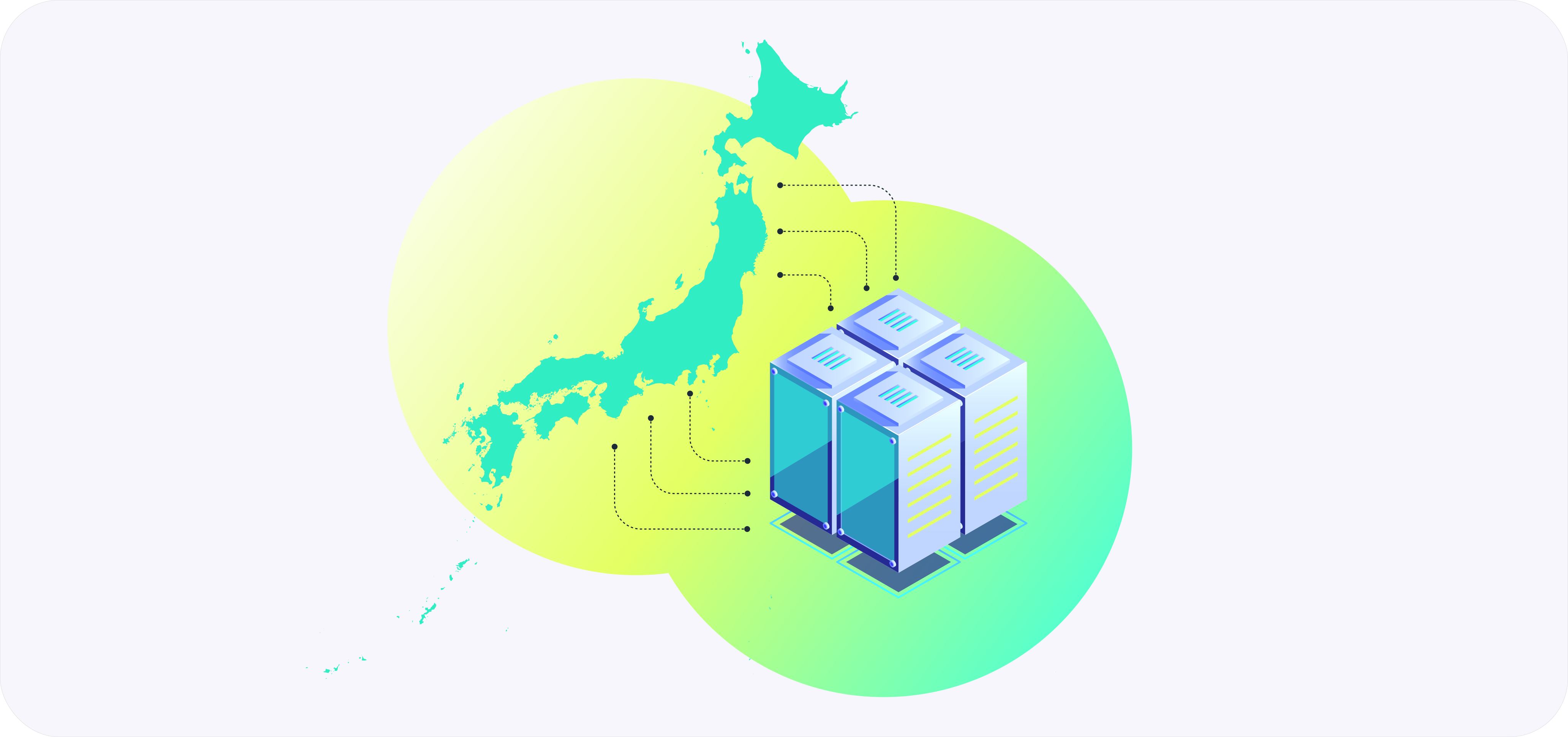
JSC is pioneering Sovereign Ethereum Equivalence, a deployment of Ethereum that follows all the security, scaling, and technology innovations of Ethereum Mainnet, but critically on validator client infrastructure that is all known, named, and located onshore in Japan.
We view this approach as analogous to the spectrum of computational service offerings in the AI world, ranging from shared cloud services, to co-located dedicated resources, to fully on-premises infrastructure for the most sensitive use cases. JSC is a public and open blockchain, but with validation specifically “on-premise” in Japan.
Ethereum Equivalence distinguishes itself from a “fork” of Ethereum. Ethereum forks, which make changes to some or all of the Ethereum codebase, must develop and maintain client software, protocol, and security updates independently. Forks typically have less client diversity1, and struggle to support new and existing customers without incurring massive costs.
JSC is fully backward and forward-compatible with the full ecosystem of Ethereum tooling.
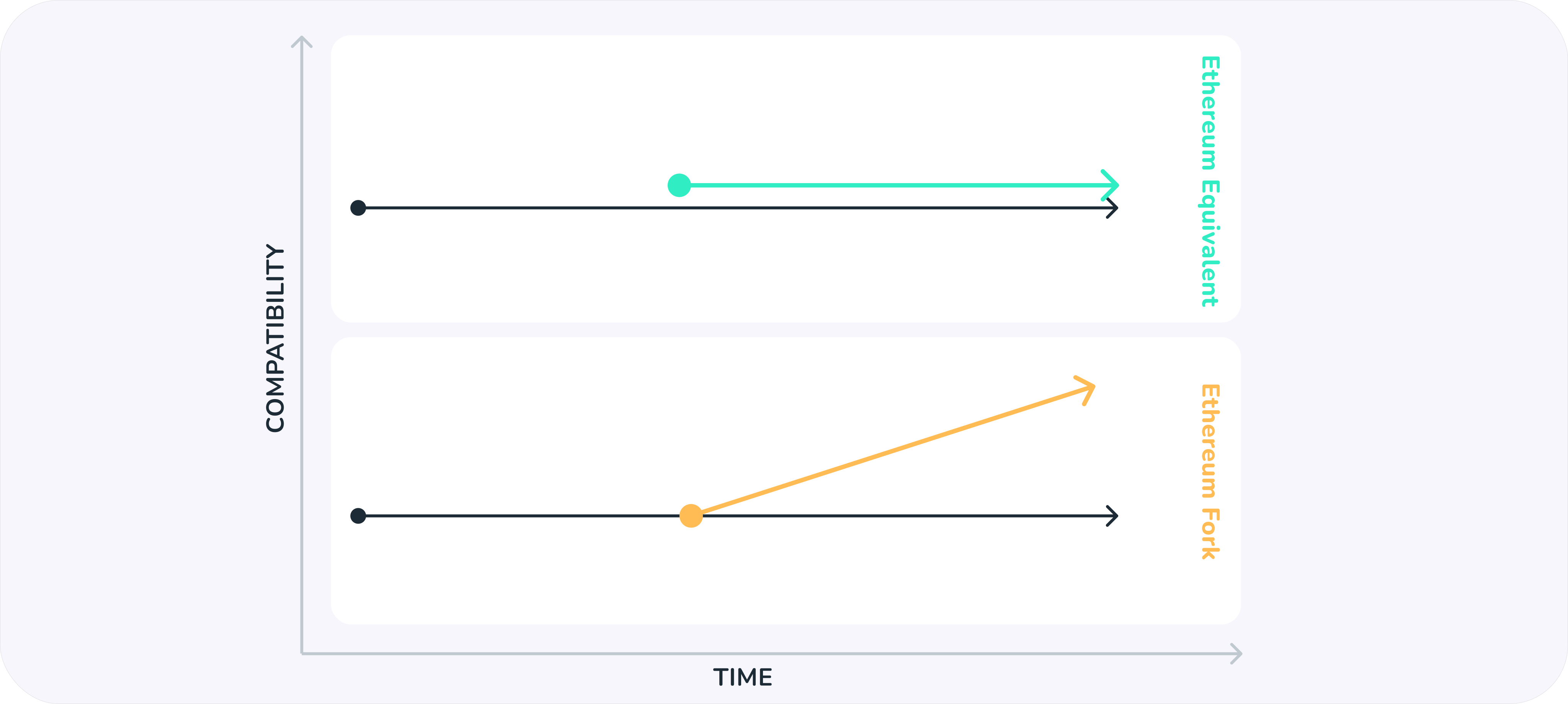
Ethereum Equivalence vs a Fork of Ethereum
Adjustments to cater to the needs of a sovereign and compliant blockchain do not compromise JSC’s interoperability with Ethereum. CCustomisation to the blockchain is under research and development, with the two primary goals being (1) blocking blacklisted securing compliant transactions, and (2) prioritizing essential transactions such as stablecoins. The remaining JSC-specific network configurations are specified in the Genesis state, which improves forward-compatibility with major Ethereum changes.
Any project that launches on Ethereum or an Ethereum-adjacent blockchain can immediately launch on the Ethereum Equivalent JSC. This includes the full ecosystem of Ethereum Layer 2 (L2) blockchains. In addition, open-source development work on Ethereum and JSC is compatible: advancements made to either chain are mutually beneficial, and we anticipate that JSC will sponsor upstream development work on Ethereum, where appropriate. JSC will also post back regular checkpoints to Mainnet Ethereum as a way to further anchor the security of JSC to Ethereum.
Footnotes
-
To avoid concentration risk it is ideal to have multiple independent implementations of blockchain client software running on the network. Ethereum Mainnet maintains over five independent client implementations, while most Ethereum forks are only able to maintain one. ↩